
Specialist Care For Jaw Joint (TMJ) Disorders In London
The temporomandibular joint (TMJ) is the jaw joint, sitting just in front of each ear, and it works every time you chew, speak or yawn. Problems with the joint and its surrounding muscles — known as TMJ disorders, or TMD — are very common, affecting up to one in four people at some point. Most cases settle with simple measures, but persistent symptoms deserve specialist assessment.
TMJ disorders can cause a wide range of symptoms, including:
There is rarely a single cause, with several factors usually combining to overload the joint or its muscles:
For most patients, TMD is a muscle-driven condition that responds well to simple treatment — but genuine joint disease needs to be recognised early by a specialist.
Treatment follows a stepwise approach, beginning with a precise diagnosis from an expert — careful history and examination, with MRI or CT scanning where needed — and the simplest effective measures first. Most patients improve without surgery.
First-line for almost all patients: a softer diet and jaw rest, anti-inflammatory medication, jaw exercises and specialist physiotherapy, and custom bite splints to protect the joint from night-time clenching. Targeted injections — to relax overactive muscles or settle inflammation within the joint — help some patients. The great majority improve substantially with these measures.
For pain, restricted opening or if the jaw is persistently getting stuck despite conservative care, arthroscopy is usually the next step: a narrow camera enters the joint through a tiny incision, allowing it to be washed out, adhesions released, inflamed tissue treated and where appropriate, the disc mobilised. It is performed under general anaesthetic, with minimal scarring and rapid recovery. You will be able to go home on the same day.
TMJ Arthroscopy In Detail Coming soon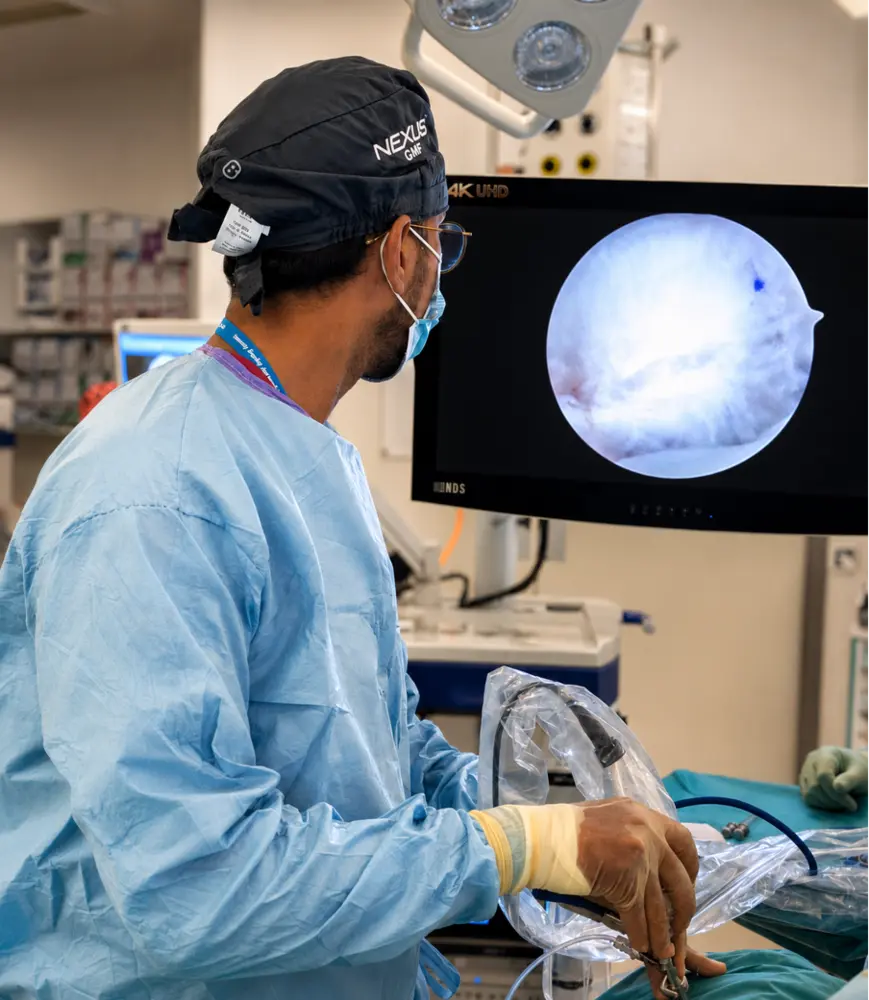
Reserved for problems that keyhole surgery cannot fully address — repairing or removing a damaged disc, reshaping the joint surfaces, treating recurrent dislocation, or removing cysts — performed through a discreet incision hidden in the natural skin crease in front of the ear.
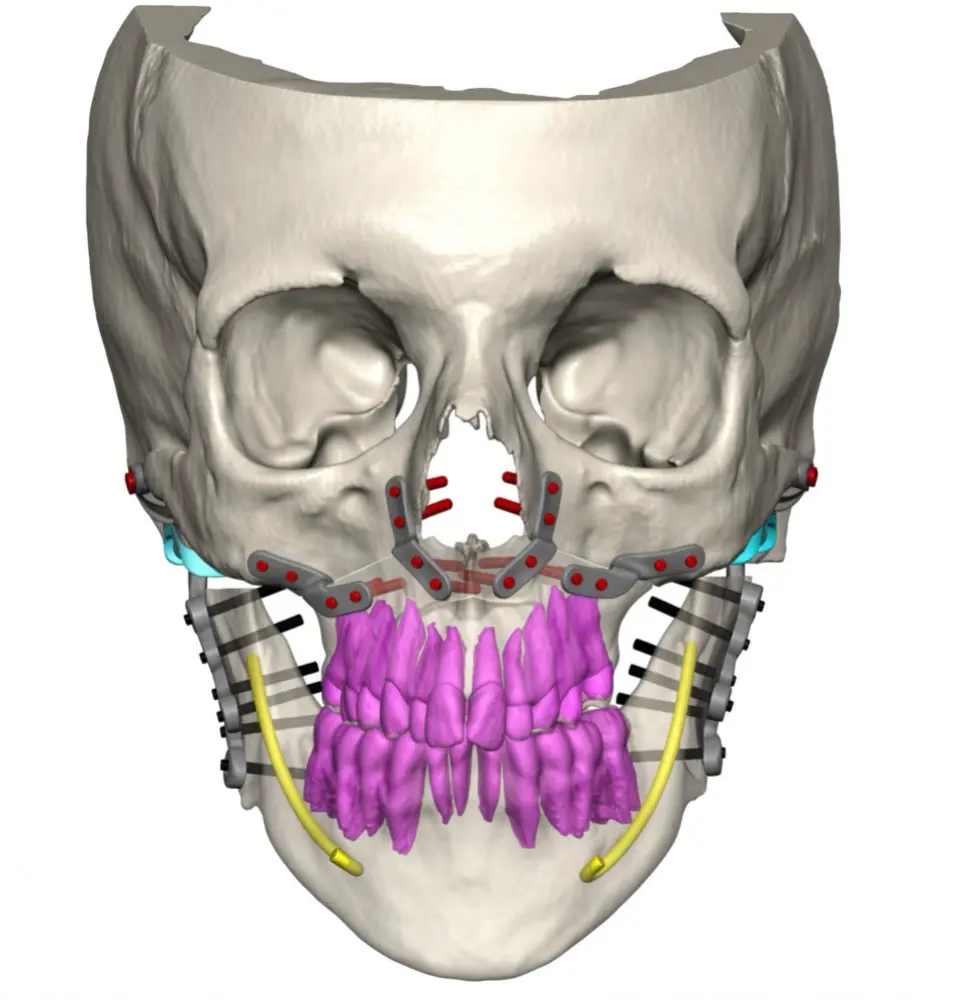
Open TMJ Surgery In Detail Coming soonFor severe disease — severe arthritis, ankylosis (fused joint), condylar resorption (shape change affecting the bite or facial appearance) or joints damaged by previous surgery — the joint can be replaced with a custom titanium total joint prosthesis.
Total TMJ Replacement In Detail Coming soon